Showing posts with label Howard Goodall. Show all posts
Showing posts with label Howard Goodall. Show all posts
Thursday, July 02, 2009


Tuesday, August 05, 2008
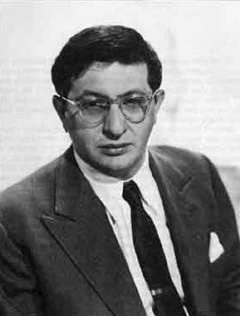
Howard Goodall's 20th Century Greats: Bernard Herrmann
BERNARD HERRMANN wrote some of the most famous film music of the twentieth century, from Citizen Kane to The Day The Earth Stood Still, Fahrenheit 451 to Taxi Driver. He is best known for his scores for Alfred Hitchcock, in particular the masterpieces Vertigo and Psycho. Herrmann completely transformed film music, dragging it out of its reliance on the sounds and textures of nineteenth century Vienna and into the modern age. Realising that each film is a one-off, and experimenting with new recording techniques and instruments, he completely re-wrote the rule book. Herrmann brought the orchestra up to date with imaginative and unprecedented musical textures and effects – his use of purely electronic instruments predate those of the classical pioneers Karlheinz Stockhausen & Edgar Varese. He used these new sounds to score a series of landmark films, from science fiction to horror to suspense. In doing so, Herrmann not only weaned the film audience off the Romantic music it was most familiar with. He introduced many of the most ‘difficult’ elements of mid twentieth century music to a mass audience, who accepted dissonance and even atonality because Herrmann cleverly adapted them to the needs of the drama. Psycho is not only the most imitated and admired film music ever. Its harsh, screaming dissonance was the very sort of music audiences had been turning their back on in concert halls. Thanks to Herrmann, they lapped it up, now in a popular form. Bernard Herrmann was consistently, brilliantly inventive, and he influenced every film composer who came after him. But he also influenced classical concert music. In his works are the seeds of the modern musical movement of ‘minimalism.’ Herrmann himself was ambivalent about his film success. He never received the respect he craved in the classical world. But he did more than anyone else to broaden the musical tastes of the public. Not in the concert hall, but in the crucible of the twentieth century’s own most important art form – cinema.
Howard Goodall on Bernard Herrmann (Part 1)
Howard Goodall on Bernard Herrmann (Part 2)
Howard Goodall on Bernard Herrmann (Part 3)
Howard Goodall on Bernard Herrmann (Part 4)
Howard Goodall on Bernard Herrmann (Part 5)
Howard Goodall on Bernard Herrmann (Part 6)
Also Check Out: Howard Goodall's 20th Century Greats: The Beatles
Saturday, January 12, 2008
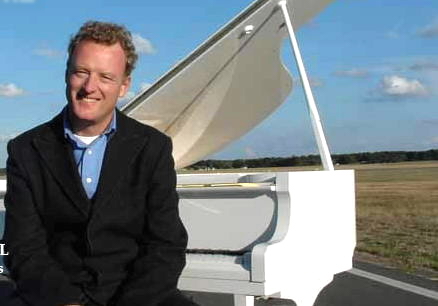
Howard Goodall's 20th Century Greats: The Beatles
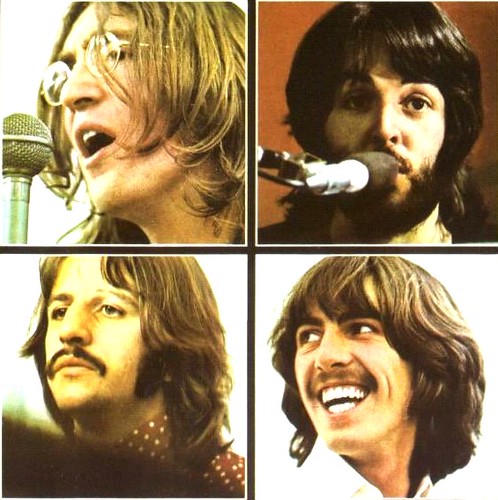
How the Fab Four rescued music
When people look back in 200 years' time at Western culture, whose music will have survived from the 20th century? Who will be our equivalent of Bach and Beethoven, Verdi and Wagner? There are big classical names from the last 100 years, including Schoenberg, Stravinsky, Shostakovich and Stockhausen, but, believes composer Howard Goodall, in dismantling the traditional keys and harmony, the building blocks of Western music, classical music lost touch with its audiences. 'The big story of 20th century music,' he says, 'is the way that classical and popular music collided with each other to create a new musical mainstream … In the 1960s, with classical music at its lowest ebb, the most important composers in the world were without doubt The Beatles.'
Goodall argues that classical composition lost its way by breaking with the traditional 'language' of Western music that listeners understood. The Beatles, he says, threw music a lifeline by building on foundations abandoned by the modernists – keys, harmony and different scales.
Keys
Western music is constructed from families of notes, called keys, each one starting on a different note. Like a palate of colours, tunes written in different keys, and combinations of keys, create different moods. All keys are based on a limited number of notes which arrange themselves into familiar patterns that sound pleasing.
Keys can be major or minor. Melodies in major keys sound happier and more upbeat; those in minor keys sound sad and wistful. Each major key has a minor key that is related to it – known as the relative minor.
Music that is at all complex or sophisticated moves from key to key in ways that may be familiar or surprising to the audience. A common key shift is from the major to the relative minor and back again – a device that Cole Porter used to great effect, most famously in 'Every Time We Say Goodbye' – but there are other key changes that are satisfying to listen to.
Cole Porter broke new ground by composing so many songs in minor keys. Many of these melodies, which drew on an East European Jewish tradition, sounded melancholy and poignant. In Porter's hands they often sounded mysterious and sensuous, too.
Harmony
Harmony means playing or singing a combination of notes simultaneously, to make chords. Adding harmony to a melody, gives music depth and an emotional dimension. Western harmony is rich, complex and versatile, containing a kind of inner movement that propels the music along.
Chords, by their very nature, group themselves together in familiar and affective patterns, and some chords are magnetically drawn towards others, giving a sense of progression and development. These progressions and patterns have been exploited by composers down the centuries.
Changes from one chord to another at the end of a piece or section of music are called cadences, from the Italian word cadare, to fall. One recognisable cadence is the 'amen' sung by church choirs.
Pentatonic scale
This is a scale formed of five notes (from the Greek word pente meaning five). There are many types of pentatonic scale but the one that is most familiar could be played on just the black notes on a piano.
Pentatonic music is prevalent in the Indian subcontinent and the Far East but these scales are also the foundations of folk music from many countries in other parts of the world. The Scottish song, 'Auld Lang Syne', is one well-known pentatonic melody.
Part 1
Part 2
Part 3
Part 4
Part 5
Part 6
Subscribe to:
Posts (Atom)
