
(http://www.theglobeandmail.com/books/the-expanded-mind/article1198638/)
Don't be fooled: Benny Shanon's book about his trip to Brazil and the reality-altering drug he found there is a serious work of science
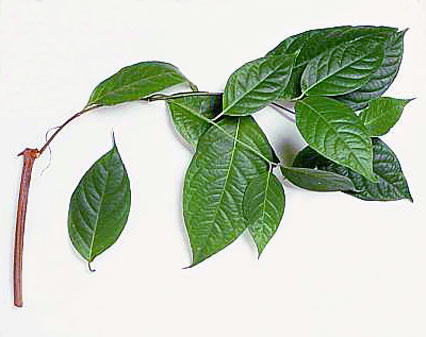
In 1991, Benny Shanon, a respected professor of psychology at Hebrew University in Jerusalem, flew to Brazil to participate in a scientific conference. After it ended, he travelled to an Amazonian outpost called Colonia. Shanon's curiosity had been piqued by reports that members of a church in Colonia consumed a psychotropic tea called ayahuasca, brewed from two rain-forest plants. Long prized by rain-forest Indians for its visionary properties, ayahuasca has recently become a sacrament for several churches in Brazil and for a growing number of spiritual seekers in the U.S. and Europe.
Shanon ended up ingesting ayahuasca in Colonia, and the experience moved him so deeply that he spent next decade exploring the tea's significance. He drank ayahuasca himself more than 100 times in many different settings, interviewed scores of people who had done so and read all he could find on ayahuasca and other mind-altering substances. He then poured his findings and reflections into a 400-plus-page book, The Antipodes of the Mind, published in 2003.
Shanon's title alludes to a line in Aldous Huxley's essay The Doors of Perception. The reference is fitting, because Shanon's brilliant book is itself an instant classic of the literature on altered states. It deserves to be placed in the same category as Huxley's work and The Varieties of Religious Experience, by William James.
Unlike some psychedelic authors, Shanon is earnest, serious, straightforward and absolutely trustworthy. He is a true scientist, dedicated to precise reporting and careful analysis rather than to entertainment. Not that his book is dull. Far from it. Antipodes is suffused with a sense of adventure, of a kind that has virtually vanished from modern science. Plunging into the depths of his own ayahuasca -intoxicated mind, Shanon resembles one of the great Victorian explorers trekking into uncharted wilds, maintaining his equilibrium and wits even in the face of the most fantastical sights.
Like Darwin on the voyage of the Beagle, Shanon is concerned primarily with collecting and categorizing data rather than theorizing. But he also ponders his and others' experiences and draws some tentative conclusions. While believing that ayahuasca can be genuinely revelatory, he cautions that it can also be “the worst of liars.” He remains skeptical of occult claims often made for the tea – that it puts us in touch with ghosts, makes us clairvoyant, lets us leave our bodies and travel astrally. Ayahuasca visions are products of the imagination, Shanon suggests, rather than glimpses of a supernatural realm existing in parallel to our own.
This proposal will sound reductionist to some, but it is actually quite provocative and raises many questions requiring further consideration. Why does the imagination, when stimulated by ayahuasca, yield visions so much more vivid and powerful than those we encounter in ordinary dreams? Why do ayahuasca -drinkers from widely disparate cultures so often hallucinate similar phenomena, such as jaguars and snakes, or palaces and royalty? Why are the visions of even an areligious person like Shanon so often laden with religious significance?
Shanon is particularly fascinated by the fact that ayahuasca so often induces sensation of self-transcendence and unity: “With this brew, the boundaries between me and the world, between me and other human beings, between the human and even the Divine are blurred and even transgressed.” These are the hallmarks of mystical experiences, whether induced by drugs, meditation or other means.
Ayahuasca, Shanon concludes, is rightly called a sacrament, because it “introduces one to realms that pertain to religion, to faith, to the Divine.” Ayahuasca left Shanon himself profoundly transformed. “For years I have characterized myself as a ‘devout atheist,'” he writes. “When I left South America I was no longer one.” Although he does not advocate any particular religious faith, his experiences led him to suspect that the “‘perennial philosophy' both advocated by mystics throughout the ages and cultures and suggested by various individuals who have partaken of ayahuasca is actually the true metaphysics.”
Antipodes will no doubt be eagerly seized upon by the psychedelic intelligentsia. But it deserves to be read by anyone interested in religion, mysticism and consciousness – and who is not? It should be required reading for psychologists, psychiatrists and neuroscientists, because it shows how absurdly simplistic are the biochemical, Darwinian and genetic models now dominating mind science. Inner space, Shanon reminds us, truly is the last great frontier of science, and its reaches are vast and wild and mysterious.
John Horgan is a science journalist and director of the Center for Science Writings at Stevens Institute of Technology, Hoboken, N.J. His most recent book is Rational Mysticism.
Showing posts with label Psychedelics. Show all posts
Showing posts with label Psychedelics. Show all posts
Wednesday, July 08, 2009
The expanded mind


Thursday, March 27, 2008
Psychedelic Chemist Explores the Surreality of Inner Space
 Self-Experimenters: Psychedelic Chemist Explores the Surreality of Inner Space, One Drug at a Time
Alexander Shulgin endured a government crackdown and hallucinations of his bones melting in pursuit of new mind-bending compounds
By David Biello
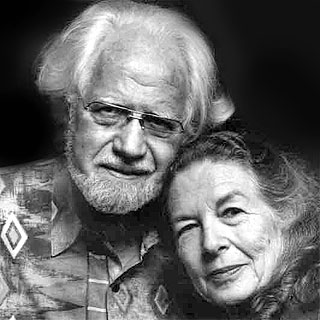
Alexander Shulgin is the world’s foremost "psychonaut." The 82-year-old chemist has not only created more of the 300 known consciousness-altering (or psychoactive) compounds than anyone living or dead, he has, by his own account, sampled somewhere between 200 and 250 of them himself—most of them cooked up in the musty lab behind his home in the hills east of Berkeley, Calif., where he has shared many a chemical voyage with his wife of 26 years, Ann.
"I take them myself because I am interested in their activity in the human mind. How would you test that in a rat or mouse?" says Shulgin, known to friends as Sasha.
He has paid the price for his avocation. Some of his creations have induced uncontrollable vomiting, paralysis and the feeling that his bones were melting, among other terrors. And though some believe Shulgin has opened the doors of perception to a new class of potentially therapeutic mind-altering compounds, others argue that he bears responsibility for the damage that ongoing abuse of such now-illicit substances can cause.
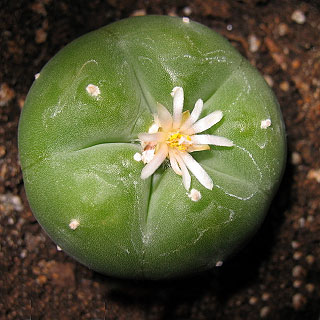
As a student at the University of California, Berkeley, in the 1950s, Shulgin’s gateway drug was mescaline, a naturally occurring psychedelic found in peyote and other groovy cacti. "It introduced me to new colors which I had never seen before," Shulgin says. "It allowed me to interpret whatever I was looking at with an entirely new vocabulary…. And yet, what a simple structure!"
In the 1960s, while working as a biochemist at The Dow Chemical Co. in San Francisco, he couldn’t resist tinkering with the potent mescaline molecule. He synthesized entirely new compounds that retained similar, trippy qualities. Some variations were less potent, but others were even more powerful or imparted their own unique twist.
Shulgin, who left Dow in 1965 to consult for the U.S. Drug Enforcement Administration (DEA) among other pursuits, offered the best of his new chemical darlings to Ann, his second wife; the most promising of these were passed along to a close circle of 10 friends until the mid-1990s, when the DEA, no longer paying for his services, raided his lab and revoked his license to work with illegal drugs.
His personal favorite, which he describes as "extraordinarily comfortable and quite erotic," is known simply as 2C-B for its chemical makeup.
One by one, Shulgin has seen many of the compounds he
 invented or experimented with become illegal in the U.S., including some that have never been synthesized by anyone and some that he thought might prove therapeutic, such as MDMA (3,4-methylenedioxymethamphetamine), better known as ecstasy. "I was very sad to see MDMA achieve the status of a Schedule 1 drug," a designation that prohibits its manufacture or use in the U.S., he says. "I felt that it would inhibit research into its medical value and that’s the way it’s turned out."
Some researchers agree that the government’s response to psychoactive drugs has deprived them of a unique window into human consciousness. After all, rodents will happily ingest most intoxicants and narcotics —from marijuana to heroin—but not the headier psychedelics.
"Peculiarly, not only did we make them illegal, but we backed away from them scientifically," says neuroscientist Roland Griffiths of Johns Hopkins University School of Medicine, one of the researchers who is restarting basic research into psychedelics. His lab has shown that psilocybin, the active ingredient in the variety of fungi known as magic mushrooms, can bring on lasting feelings of well-being. This may indicate that it could be harnessed to help clinically depressed or addicted patients.
Shulgin, who continues to study cacti for new chemical routes to altered states, predicts that by the year 2060, the number of different known psychedelics will have grown from 300 to 2,000. He intends to discover—and perhaps sample—as many of them as he can. "It is like opening a door to a hallway," he says, "that has unopened doors for its entire length, and behind every door is a world with which you are totally unfamiliar."
Subscribe to:
Posts (Atom)
