Saturday, January 12, 2008

Howard Goodall's 20th Century Greats: The Beatles


Beatles


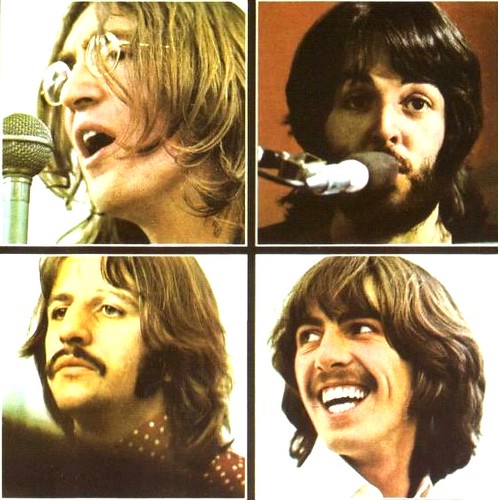
How the Fab Four rescued music

When people look back in 200 years' time at Western culture, whose music will have survived from the 20th century? Who will be our equivalent of Bach and Beethoven, Verdi and Wagner? There are big classical names from the last 100 years, including Schoenberg, Stravinsky, Shostakovich and Stockhausen, but, believes composer Howard Goodall, in dismantling the traditional keys and harmony, the building blocks of Western music, classical music lost touch with its audiences. 'The big story of 20th century music,' he says, 'is the way that classical and popular music collided with each other to create a new musical mainstream … In the 1960s, with classical music at its lowest ebb, the most important composers in the world were without doubt The Beatles.'

Goodall argues that classical composition lost its way by breaking with the traditional 'language' of Western music that listeners understood. The Beatles, he says, threw music a lifeline by building on foundations abandoned by the modernists – keys, harmony and different scales.

Keys

Western music is constructed from families of notes, called keys, each one starting on a different note. Like a palate of colours, tunes written in different keys, and combinations of keys, create different moods. All keys are based on a limited number of notes which arrange themselves into familiar patterns that sound pleasing.

Keys can be major or minor. Melodies in major keys sound happier and more upbeat; those in minor keys sound sad and wistful. Each major key has a minor key that is related to it – known as the relative minor.

Music that is at all complex or sophisticated moves from key to key in ways that may be familiar or surprising to the audience. A common key shift is from the major to the relative minor and back again – a device that Cole Porter used to great effect, most famously in 'Every Time We Say Goodbye' – but there are other key changes that are satisfying to listen to.

Cole Porter broke new ground by composing so many songs in minor keys. Many of these melodies, which drew on an East European Jewish tradition, sounded melancholy and poignant. In Porter's hands they often sounded mysterious and sensuous, too.

Harmony

Harmony means playing or singing a combination of notes simultaneously, to make chords. Adding harmony to a melody, gives music depth and an emotional dimension. Western harmony is rich, complex and versatile, containing a kind of inner movement that propels the music along.

Chords, by their very nature, group themselves together in familiar and affective patterns, and some chords are magnetically drawn towards others, giving a sense of progression and development. These progressions and patterns have been exploited by composers down the centuries.

Changes from one chord to another at the end of a piece or section of music are called cadences, from the Italian word cadare, to fall. One recognisable cadence is the 'amen' sung by church choirs.

Pentatonic scale

This is a scale formed of five notes (from the Greek word pente meaning five). There are many types of pentatonic scale but the one that is most familiar could be played on just the black notes on a piano.

Pentatonic music is prevalent in the Indian subcontinent and the Far East but these scales are also the foundations of folk music from many countries in other parts of the world. The Scottish song, 'Auld Lang Syne', is one well-known pentatonic melody.


Part 1


Part 2


Part 3


Part 4


Part 5


Part 6


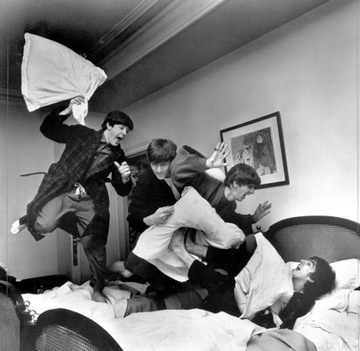
Beatles Pillow Fight

Sunday, January 06, 2008

Who Do We Vote For This Time Around? A Letter from Michael Moore

Friends,

A new year has begun. And before we've had a chance to break our New Year's resolutions, we find ourselves with a little more than 24 hours before the good people of Iowa tell us whom they would like to replace the man who now occupies three countries and a white house.

Twice before, we have begun the process to stop this man, and twice we have failed. Eight years of our lives as Americans will have been lost, the world left in upheaval against us... and yet now, today, we hope against hope that our moment has finally arrived, that the amazingly powerful force of the Republican Party will somehow be halted. But we know that the Democrats are experts at snatching defeat from the jaws of victory, and if there's a way to blow this election, they will find it and do it with gusto.

Do you feel the same as me? That the Democratic front-runners are a less-than-stellar group of candidates, and that none of them are the "slam dunk" we wish they were? Of course, there are wonderful things about each of them. Any one of them would be infinitely better than what we have now. Personally, Congressman Kucinich, more than any other candidate, shares the same positions that I have on the issues (although the UFO that picked ME up would only take me as far as Kalamazoo). But let's not waste time talking about Dennis. Even he is resigned to losing, with statements like the one he made yesterday to his supporters in Iowa to throw their support to Senator Obama as their "second choice."

So, it's Hillary, Obama, Edwards -- now what do we do?

Two months ago, Rolling Stone magazine asked me to do a cover story where I would ask the hard questions that no one was asking in one-on-one interviews with Senators Clinton, Obama and Edwards. "The Top Democrats Face Off with Michael Moore." The deal was that all three candidates had to agree to let me interview them or there was no story. Obama and Edwards agreed. Mrs. Clinton said no, and the cover story was thus killed.

Why would the love of my life, Hillary Clinton, not sit down to talk with me? What was she afraid of?

Those of you who are longtime readers of mine may remember that 11 years ago I wrote a chapter (in my first book) entitled, "My Forbidden Love for Hillary." I was fed up with the treatment she was getting, most of it boringly sexist, and I thought somebody should stand up for her. I later met her and she thanked me for referring to her as "one hot s***kicking feminist babe." I supported and contributed to her run for the U.S. Senate. I think she is a decent and smart person who loves this country, cares deeply about kids, and has put up with more crap than anyone I know of (other than me) from the Crazy Right. Her inauguration would be a thrilling sight, ending 218 years of white male rule in a country where 51% of its citizens are female and 64% are either female or people of color.

And yet, I am sad to say, nothing has disappointed me more than the disastrous, premeditated vote by Senator Hillary Clinton to send us to war in Iraq. I'm not only talking about her first vote that gave Mr. Bush his "authorization" to invade -- I'm talking about every single OTHER vote she then cast for the next four years, backing and funding Bush's illegal war, and doing so with verve. She never met a request from the White House for war authorization that she didn't like. Unlike the Kerrys and the Bidens who initially voted for authorization but later came to realize the folly of their decision, Mrs. Clinton continued to cast numerous votes for the war until last March -- four long years of pro-war votes, even after 70% of the American public had turned against the war. She has steadfastly refused to say that she was wrong about any of this, and she will not apologize for her culpability in America's worst-ever foreign policy disaster. All she can bring herself to say is that she was "misled" by "faulty intelligence."

Let's assume that's true. Do you want a President who is so easily misled? I wasn't "misled," and millions of others who took to the streets in February of 2003 weren't "misled" either. It was simply amazing that we knew the war was wrong when none of us had been briefed by the CIA, none of us were national security experts, and none of us had gone on a weapons inspection tour of Iraq. And yet... we knew we were being lied to! Let me ask those of you reading this letter: Were YOU "misled" -- or did you figure it out sometime between October of 2002 and March of 2007 that George W. Bush was up to something rotten? Twenty-three other senators were smart enough to figure it out and vote against the war from the get-go. Why wasn't Senator Clinton?

I have a theory: Hillary knows the sexist country we still live in and that one of the reasons the public, in the past, would never consider a woman as president is because she would also be commander in chief. The majority of Americans were concerned that a woman would not be as likely to go to war as a man (horror of horrors!). So, in order to placate that mindset, perhaps she believed she had to be as "tough" as a man, she had to be willing to push The Button if necessary, and give the generals whatever they wanted. If this is, in fact, what has motivated her pro-war votes, then this would truly make her a scary first-term president. If the U.S. is faced with some unforeseen threat in her first years, she knows that in order to get re-elected she'd better be ready to go all Maggie Thatcher on whoever sneezes in our direction. Do we want to risk this, hoping the world makes it in one piece to her second term?

I have not even touched on her other numerous -- and horrendous -- votes in the Senate, especially those that have made the middle class suffer even more (she voted for Bush's first bankruptcy bill, and she is now the leading recipient of payoff money -- I mean campaign contributions -- from the health care industry). I know a lot of you want to see her elected, and there is a very good chance that will happen. There will be plenty of time to vote for her in the general election if all the pollsters are correct. But in the primaries and caucuses, isn't this the time to vote for the person who most reflects the values and politics you hold dear? Can you, in good conscience, vote for someone who so energetically voted over and over and over again for the war in Iraq? Please give this serious consideration.

Now, on to the two candidates who did agree to do the interview with me...

Barack Obama is a good and inspiring man. What a breath of fresh air! There's no doubting his sincerity or his commitment to trying to straighten things out in this country. But who is he? I mean, other than a guy who gives a great speech? How much do any of us really know about him? I know he was against the war. How do I know that? He gave a speech before the war started. But since he joined the senate, he has voted for the funds for the war, while at the same time saying we should get out. He says he's for the little guy, but then he votes for a corporate-backed bill to make it harder for the little guy to file a class action suit when his kid swallows lead paint from a Chinese-made toy. In fact, Obama doesn't think Wall Street is a bad place. He wants the insurance companies to help us develop a new health care plan -- the same companies who have created the mess in the first place. He's such a feel-good kinda guy, I get the sense that, if elected, the Republicans will eat him for breakfast. He won't even have time to make a good speech about it.

But this may be a bit harsh. Senator Obama has a big heart, and that heart is in the right place. Is he electable? Will more than 50% of America vote for him? We'd like to believe they would. We'd like to believe America has changed, wouldn't we? Obama lets us feel better about ourselves -- and as we look out the window at the guy snowplowing his driveway across the street, we want to believe he's changed, too. But are we dreaming?

And then there's John Edwards.

It's hard to get past the hair, isn't it? But once you do -- and recently I have chosen to try -- you find a man who is out to take on the wealthy and powerful who have made life so miserable for so many. A candidate who says things like this: "I absolutely believe to my soul that this corporate greed and corporate power has an ironclad hold on our democracy." Whoa. We haven't heard anyone talk like that in a while, at least not anyone who is near the top of the polls. I suspect this is why Edwards is doing so well in Iowa, even though he has nowhere near the stash of cash the other two have. He won't take the big checks from the corporate PACs, and he is alone among the top three candidates in agreeing to limit his spending and be publicly funded. He has said, point-blank, that he's going after the drug companies and the oil companies and anyone else who is messing with the American worker. The media clearly find him to be a threat, probably because he will go after their monopolistic power, too. This is Roosevelt/Truman kind of talk. That's why it's resonating with people in Iowa, even though he doesn't get the attention Obama and Hillary get -- and that lack of coverage may cost him the first place spot tomorrow night. After all, he is one of those white guys who's been running things for far too long.

And he voted for the war. But unlike Senator Clinton, he has stated quite forcefully that he was wrong. And he has remorse. Should he be forgiven? Did he learn his lesson? Like Hillary and Obama, he refused to promise in a September debate that there will be no U.S. troops in Iraq by the end of his first term in 2013. But this week in Iowa, he changed his mind. He went further than Clinton and Obama and said he'd have all the troops home in less than a year.

Edwards is the only one of the three front-runners who has a universal health care plan that will lead to the single-payer kind all other civilized countries have. His plan doesn't go as fast as I would like, but he is the only one who has correctly pointed out that the health insurance companies are the enemy and should not have a seat at the table.

I am not endorsing anyone at this point. This is simply how I feel in the first week of the process to replace George W. Bush. For months I've been wanting to ask the question, "Where are you, Al Gore?" You can only polish that Oscar for so long. And the Nobel was decided by Scandinavians! I don't blame you for not wanting to enter the viper pit again after you already won. But getting us to change out our incandescent light bulbs for some irritating fluorescent ones isn't going to save the world. All it's going to do is make us more agitated and jumpy and feeling like once we get home we haven't really left the office.

On second thought, would you even be willing to utter the words, "I absolutely believe to my soul that this corporate greed and corporate power has an ironclad hold on our democracy?" 'Cause the candidate who understands that, and who sees it as the root of all evil -- including the root of global warming -- is the President who may lead us to a place of sanity, justice and peace.

Yours,

Michael Moore (not an Iowa voter, but appreciative of any state that has a town named after a sofa)

Wednesday, January 02, 2008

Harrison Bergeron by Kurt Vonnegut (1961)

THE YEAR WAS 2081, and everybody was finally equal. They weren’t only equal before God and the law. They were equal every which way. Nobody was smarter than anybody else. Nobody was better looking than anybody else. Nobody was stronger or quicker than anybody else. All this equality was due to the 211th, 212th, and 213th Amendments to the Constitution, and to the unceasing vigilance of agents of the United States Handicapper General.


Some things about living still weren’t quite right, though. April, for instance, still drove people crazy by not being springtime. And it was in that clammy month that the H-G men took George and Hazel Bergeron’s fourteen-year-old son, Harrison, away.


It was tragic, all right, but George and Hazel couldn’t think about it very hard. Hazel had a perfectly average intelligence, which meant she couldn’t think about anything except in short bursts. And George, while his intelligence was way above normal, had a little mental handicap radio in his ear. He was required by law to wear it at all times. It was tuned to a government transmitter. Every twenty seconds or so, the transmitter would send out some sharp noise to keep people like George from taking unfair advantage of their brains.


George and Hazel were watching television. There were tears on Hazel’s cheeks, but she’d forgotten for the moment what they were about.


On the television screen were ballerinas.


A buzzer sounded in George’s head. His thoughts fled in panic, like bandits from a burglar alarm.


“That was a real pretty dance, that dance they just did,” said Hazel.


“Huh?” said George.


“That dance – it was nice,” said Hazel.


“Yup,” said George. He tried to think a little about the ballerinas. They weren’t really very good – no better than anybody else would have been, anyway. They were burdened with sashweights and bags of birdshot, and their faces were masked, so that no one, seeing a free and graceful gesture or a pretty face, would feel like something the cat drug in. George was toying with the vague notion that maybe dancers shouldn’t be handicapped. But he didn’t get very far with it before another noise in his ear radio scattered his thoughts.


George winced. So did two out of the eight ballerinas.


Hazel saw him wince. Having no mental handicap herself she had to ask George what the latest sound had been.


“Sounded like somebody hitting a milk bottle with a ball peen hammer,” said George.


“I’d think it would be real interesting, hearing all the different sounds,” said Hazel, a little envious. “All the things they think up.”


“Um,” said George.


“Only, if I was Handicapper General, you know what I would do?” said Hazel. Hazel, as a matter of fact, bore a strong resemblance to the Handicapper General, a woman named Diana Moon Glampers. “If I was Diana Moon Glampers,” said Hazel, “I’d have chimes on Sunday – just chimes. Kind of in honor of religion.”


“I could think, if it was just chimes,” said George.


“Well – maybe make ‘em real loud,” said Hazel. “I think I’d make a good Handicapper General.”


“Good as anybody else,” said George.


“Who knows better’n I do what normal is?” said Hazel.


“Right,” said George. He began to think glimmeringly about his abnormal son who was now in jail, about Harrison, but a twenty-one-gun salute in his head stopped that.


“Boy!” said Hazel, “that was a doozy, wasn’t it?”


It was such a doozy that George was white and trembling and tears stood on the rims of his red eyes. Two of the eight ballerinas had collapsed to the studio floor, were holding their temples.


“All of a sudden you look so tired,” said Hazel. “Why don’t you stretch out on the sofa, so’s you can rest your handicap bag on the pillows, honeybunch.” She was referring to the forty-seven pounds of birdshot in canvas bag, which was padlocked around George’s neck. “Go on and rest the bag for a little while,” she said. “I don’t care if you’re not equal to me for a while.”


George weighed the bag with his hands. “I don’t mind it,” he said. “I don’t notice it any more. It’s just a part of me.


“You been so tired lately – kind of wore out,” said Hazel. “If there was just some way we could make a little hole in the bottom of the bag, and just take out a few of them lead balls. Just a few.”


“Two years in prison and two thousand dollars fine for every ball I took out,” said George. “I don’t call that a bargain.”


“If you could just take a few out when you came home from work,” said Hazel. “I mean – you don’t compete with anybody around here. You just set around.”


“If I tried to get away with it,” said George, “then other people’d get away with it and pretty soon we’d be right back to the dark ages again, with everybody competing against everybody else. You wouldn’t like that, would you?”


“I’d hate it,” said Hazel.


“There you are,” said George. “The minute people start cheating on laws, what do you think happens to society?”


If Hazel hadn’t been able to come up with an answer to this question, George couldn’t have supplied one. A siren was going off in his head.


“Reckon it’d fall all apart,” said Hazel.


“What would?” said George blankly.


“Society,” said Hazel uncertainly. “Wasn’t that what you just said?”


“Who knows?” said George.


The television program was suddenly interrupted for a news bulletin. It wasn’t clear at first as to what the bulletin was about, since the announcer, like all announcers, had a serious speech impediment. For about half a minute, and in a state of high excitement, the announcer tried to say, “Ladies and gentlemen – ”


He finally gave up, handed the bulletin to a ballerina to read.


“That’s all right –” Hazel said of the announcer, “he tried. That’s the big thing. He tried to do the best he could with what God gave him. He should get a nice raise for trying so hard.”


“Ladies and gentlemen” said the ballerina, reading the bulletin. She must have been extraordinarily beautiful, because the mask she wore was hideous. And it was easy to see that she was the strongest and most graceful of all the dancers, for her handicap bags were as big as those worn by two-hundred-pound men.


And she had to apologize at once for her voice, which was a very unfair voice for a woman to use. Her voice was a warm, luminous, timeless melody. “Excuse me – ” she said, and she began again, making her voice absolutely uncompetitive.


“Harrison Bergeron, age fourteen,” she said in a grackle squawk, “has just escaped from jail, where he was held on suspicion of plotting to overthrow the government. He is a genius and an athlete, is under–handicapped, and should be regarded as extremely dangerous.”


A police photograph of Harrison Bergeron was flashed on the screen – upside down, then sideways, upside down again, then right side up. The picture showed the full length of Harrison against a background calibrated in feet and inches. He was exactly seven feet tall.


The rest of Harrison’s appearance was Halloween and hardware. Nobody had ever worn heavier handicaps. He had outgrown hindrances faster than the H–G men could think them up. Instead of a little ear radio for a mental handicap, he wore a tremendous pair of earphones, and spectacles with thick wavy lenses. The spectacles were intended to make him not only half blind, but to give him whanging headaches besides.


Scrap metal was hung all over him. Ordinarily, there was a certain symmetry, a military neatness to the handicaps issued to strong people, but Harrison looked like a walking junkyard. In the race of life, Harrison carried three hundred pounds.


And to offset his good looks, the H–G men required that he wear at all times a red rubber ball for a nose, keep his eyebrows shaved off, and cover his even white teeth with black caps at snaggle–tooth random.


“If you see this boy,” said the ballerina, “do not – I repeat, do not – try to reason with him.”


There was the shriek of a door being torn from its hinges.


Screams and barking cries of consternation came from the television set. The photograph of Harrison Bergeron on the screen jumped again and again, as though dancing to the tune of an earthquake.


George Bergeron correctly identified the earthquake, and well he might have – for many was the time his own home had danced to the same crashing tune. “My God –” said George, “that must be Harrison!”


The realization was blasted from his mind instantly by the sound of an automobile collision in his head.


When George could open his eyes again, the photograph of Harrison was gone. A living, breathing Harrison filled the screen.


Clanking, clownish, and huge, Harrison stood in the center of the studio. The knob of the uprooted studio door was still in his hand. Ballerinas, technicians, musicians, and announcers cowered on their knees before him, expecting to die.


“I am the Emperor!” cried Harrison. “Do you hear? I am the Emperor! Everybody must do what I say at once!” He stamped his foot and the studio shook.


“Even as I stand here –” he bellowed, “crippled, hobbled, sickened – I am a greater ruler than any man who ever lived! Now watch me become what I can become!”


Harrison tore the straps of his handicap harness like wet tissue paper, tore straps guaranteed to support five thousand pounds.


Harrison’s scrap–iron handicaps crashed to the floor.


Harrison thrust his thumbs under the bar of the padlock that secured his head harness. The bar snapped like celery. Harrison smashed his headphones and spectacles against the wall.


He flung away his rubber–ball nose, revealed a man that would have awed Thor, the god of thunder.


“I shall now select my Empress!” he said, looking down on the cowering people. “Let the first woman who dares rise to her feet claim her mate and her throne!”


A moment passed, and then a ballerina arose, swaying like a willow.


Harrison plucked the mental handicap from her ear, snapped off her physical handicaps with marvelous delicacy. Last of all, he removed her mask.


She was blindingly beautiful.


“Now” said Harrison, taking her hand, “shall we show the people the meaning of the word dance? Music!” he commanded.


The musicians scrambled back into their chairs, and Harrison stripped them of their handicaps, too. “Play your best,” he told them, “and I’ll make you barons and dukes and earls.”


The music began. It was normal at first – cheap, silly, false. But Harrison snatched two musicians from their chairs, waved them like batons as he sang the music as he wanted it played. He slammed them back into their chairs.


The music began again and was much improved.


Harrison and his Empress merely listened to the music for a while – listened gravely, as though synchronizing their heartbeats with it.


They shifted their weights to their toes.


Harrison placed his big hands on the girl’s tiny waist, letting her sense the weightlessness that would soon be hers.


And then, in an explosion of joy and grace, into the air they sprang!


Not only were the laws of the land abandoned, but the law of gravity and the laws of motion as well.


They reeled, whirled, swiveled, flounced, capered, gamboled, and spun.


They leaped like deer on the moon.


The studio ceiling was thirty feet high, but each leap brought the dancers nearer to it. It became their obvious intention to kiss the ceiling.


They kissed it.


And then, neutralizing gravity with love and pure will, they remained suspended in air inches below the ceiling, and they kissed each other for a long, long time.


It was then that Diana Moon Glampers, the Handicapper General, came into the studio with a double-barreled ten-gauge shotgun. She fired twice, and the Emperor and the Empress were dead before they hit the floor.


Diana Moon Glampers loaded the gun again. She aimed it at the musicians and told them they had ten seconds to get their handicaps back on.


It was then that the Bergerons’ television tube burned out.


Hazel turned to comment about the blackout to George.


But George had gone out into the kitchen for a can of beer.


George came back in with the beer, paused while a handicap signal shook him up. And then he sat down again. “You been crying?” he said to Hazel.


“Yup,” she said,


“What about?” he said.


“I forget,” she said. “Something real sad on television.”


“What was it?” he said.


“It’s all kind of mixed up in my mind,” said Hazel.


“Forget sad things,” said George.


“I always do,” said Hazel.


“That’s my girl,” said George. He winced. There was the sound of a riveting gun in his head.


“Gee – I could tell that one was a doozy,” said Hazel.


“You can say that again,” said George.


“Gee –” said Hazel, “I could tell that one was a doozy.”
Monday, December 31, 2007

HH Dalai Lama::New Year's Thoughts

Within less than fifty years, I, Tenzin Gyatso the Buddhist monk, will be no more than a memory. Indeed, it is doubtful whether a single person reading these words will be alive a century from now. Time passes unhindered. When we make mistakes, we cannot turn the clock back and try again. All we can do is use the present well. Therefore, if when our final day comes we are able to look back and see that we have lived full, productive, and meaningful lives, that will at least be of some comfort. If we cannot, we may be very sad. But which of these we experience is up to us.

The best way to ensue that when we approach death we do so without remorse is to ensure that in the present moment we conduct ourselves responsibly and with compassion for others. Actually, this is in our own interest, and not just because it will benefit us in the future. As we have seen, compassion is one of the principal things that make our lives meaningful. It is the source of all lasting happiness and joy. And is the foundation of a good heart, the heart of one who acts out of a desire to help others. Through kindness, through affection, through honesty, through truth and justice toward all others we ensure our own benefit. This is not a matter for complicated theorizing. It is a matter of common sense. There is no denying that our happiness is inextricably bound up with the happiness of others. There is no denying that if society suffers, we ourselves suffer. Nor is there any denying that the more our hearts and minds afflicted with ill-will, the more miserable we become. Thus we can reject everything else: religion, ideology, all received wisdom. But we cannot escape the necessity of love and compassion.

This, then, is my true religion, my simple faith. In this sense, there is no need for temple or church, for mosque or synagogue, no need for complicated philosophy, doctrine, or dogma. Our own heart, our own mind, is the temple. The doctrine is compassion. Love for others and respect for their rights and dignity, no matter who or what they are: ultimately these are all we need. So long as we practice these in our daily lives, then no matter if we are learned or unlearned, whether we believe in Buddha or God, or follow some other religion or none at all, as long as we have compassion for others and conduct ourselves with restraint out of a sense of responsibility, there is no doubt we will be happy.

Why, then, if it is so simple to be happy, do we find it so hard? Unfortunately, though most of us think of ourselves as compassionate, we tend to ignore these common-sense truths. We neglect to confront our negative thoughts and emotions. Unlike the farmer who follows the seasons and does not hesitate to cultivate the land when the moment comes, we waste so much of our time in meaningless activity. We feel deep regret over trivial matters like losing money while keeping from doing what is genuinely important without the slightest feeling of remorse. Instead of rejoicing in the opportunity we have to contribute to others' well-being, we merely take our pleasures where we can. We shrink from considering others on the grounds that we are too busy. We run right and left, making calculations and telephone calls and thinking that this would be better than that. We do one thing but worry that if something else comes along we had better do another. But in this we engage only in the coarsest and most elementary levels of the human spirit. Moreover, by being inattentive to the needs of others, inevitably we end up harming them. We think ourselves very clever, but how do we use our abilities? All too often we use them to deceive our neighbours, to take advantage of them and better ourselves at their expense. And when things do not work out, full of self-righteosness, we blame them for our difficulties.

Yet lasting satisfaction cannot be derived from the acquisition of objects. No matter how many friends we acquire, they cannot make us happy. And indulgence in sensual pleasure is nothing but a gateway to suffering. It is like honey smeared along the cutting edge of a sword. Of course, that is not to say that we should despise our bodies. On the contrary, we cannot be of help to others without a body. But we need to avoid the extremes which can lead to harm.

In focusing on the mundane, what is essential remains hidden from us. Of course, if we could be truly happy doing so, then it would be entirely reasonable to live like this. Yet we cannot. At best, we get through life without too much trouble. But then when problems assail us, as they must, we are unprepared. We find that we cannot cope. We are left despairing and unhappy.

Therefore, with my two hands joined, I appeal to you the reader to ensure that you make the rest of your life as meaningful as possible. Do this by engaging in spiritual practice if you can. As I hope I have made clear, there is nothing mysterious about this. It consists in nothing more than acting out of concern for others. And provided you undertake this practice sincerely and with persistence, little by little, step by step you will gradually be able to reorder your habits and attitudes so that you think less about your own narrow concerns and more of others'. In doing so, you will find that you enjoy peace and happiness yourself.

Relinquish your envy, let go your desire to triumph over others. Instead, try to benefit them. With kindness, with courage, and confident that in doing so you are sure to meet with success, welcome others with a smile. Be straightforward. And try to be impartial. Treat everyone as if they were a close friend. I say this neither as Dalai Lama nor as someone who has special powers of ability. Of these I have none, I speak as a human being: one who, like yourself, wishes to be happy and not to suffer.

If you cannot, for whatever reason, be of help to others, at least don't harm them. Consider yourself a tourist. Think of the world as it is seen from space, so small and insignificant yet so beautiful. Could there really be anything to be gained from harming others during our stay here? Is it not preferable, and more reasonable, to relax and enjoy ourselves quietly, just as if we were visiting a different neighbourhood? Therefore, if in the midst of your enjoyment of the world you have a moment, try to help in however small a way those who are downtrodden and those who, for whatever reason, cannot or do not help themselves. Try not to turn away from those whose appearance is disturbing, from the ragged and unwell. Try never to think of them as inferior to yourself. If you can, try not even to think of yourself as better than the humblest beggar. You will look the same in your grave.

To close with, I would like to share a short prayer which gives me great inspiration in my quest to benefit others:

May I become at all times,

both now and forever

A protector for those without protection

A guide for those who have lost their way

A ship for those with oceans to cross

A bridge for those with rivers to cross

A sanctuary for those in danger

A lamp for those without light

A place of refuge for those who lack shelter

And a servant to all in need.


- an excerpt from 'Ethics for the New Millennium' by His Holiness the Dalai Lama.