
Many think of the market as a mighty, erratic beast capable of transporting continents upon its back when domesticated by the adroit hands of statesmen but if left untamed would raze the defenseless into microscopic particles. This conception of networks of voluntary exchange is a dire mistake on a host of issues none more considerable than the environment. Too much trust is yielded to regulation and oversight while industries holding much ecological promise such as Solid Waste Disposal, Agribusiness and Nuclear Power fall victim to misinformed zealots who end up undermining their cause.The last place one expects to discover eco-centered innovation are smelly eyesores yet within the past thirty years dumps have handily outpaced expectations. Because these rolling hills of refuse are such easy targets a piece of legislation entitled the Resource Conservation and Recovery Act (RCRA) was passed by Congress in 1976 regulating waste materials. Later tighter restrictions on landfills were added through Subtitle D in 1991. After the passage of Subtitle D a measurable decline in Solid Waste Management facilities lead to more privatization and larger sites. By conventional wisdom this paradigm shift should have resulted in catastrophe. What actually occurred was remarkable.
Despite a steady flow of solid waste, landfill capacity actually increased with time. Between 1986-1991 13 states reported their dumps contained under 5 years of capacity. Presently, no states report landfills below 5 years of capacity, and the numbers for national facilities are even more heartening. These sites retained 11 years of capacity in the late-'80s, jumped to 14 years through the mid-'90s and currently maintain around 16 years of capacity. (source) Considering the rate of waste in the U.S. remains relatively constant per capita but swells in relation to population, these statistics become quite astounding. Even though more garbage enter landfills the lifespan of these sites increases. Incineration, improved recycling rates and inter-state capacity sharing assist in controlling landfill volume nationwide. (source)
Even the deleterious consequences of dumps have either been tapered or commuted. The strategic placement of landfills away from densely populated residential areas and waterways largely mitigates ground water contamination. Porous, subterranean fabrics called geotextiles filter hazardous pollutants inhibiting dangerous leakage. Methane gas emissions from decomposing trash can now be harnessed as an energy source. Carpet manufacturer, Interface Inc., decreased natural gas consumption by 20% since implementing this new technique in 2003. (source) Breakthroughs keep refining these technologies year after year ensuring improved safety and performance.Further up the chain of production Agribusiness continually boasts more efficient ways of cultivating crops with clever weather-resistant features. How any conscious, purportedly compassionate person could daunt this agricultural explosion falls beyond censure. The genetic strides engineered by private companies allow third world farmers greater growing flexibility and output, and the simple fact is because of these graciously unnatural modifications more food is generated globally with less land than ever before. Taking the numbers for the U.S. alone, corn harvests have increased by an additional 36%, soybeans by 12% and cotton by 31% thanks to biotechnology. (source) Farmers now use wireless equipment to measure how much water and fertilizer crops require to reduce waste and lower costs. Researchers augmented the plants themselves so they recover more quickly during droughts and floods -- an answered prayer to poor, Asiatic nations; require less tilling decreasing the overall amount of erosion and runoff; rely on 70% less water with equal or greater yields and repel pests diminishing the application of pesticides. Genetically modified seeds currently inaccessible to farmers are projected to be brought to market as soon as 2012.
Strictly "organic" farmers experience none of these benefits and leave behind a larger environmental footprint than Agribusiness. Because local farms deliver to a legion of individual retailers without a primary distribution center or encourage customers to pick-up their goods directly more fossil fuel gets dumped into the atmosphere while Agribusiness ships in bulk to fewer locations and imports their product from all over the world from regions specifically chosen to maximize efficiency for any given commodity. (source) The result is cheaper prices, better quality and less greenhouse gasses.As demonized as Agribusiness and genetically modified foods, or "Frankenfoods," are at present no other industry proves to be a scarier boogieman for nebbish environmentalists than Nuclear Power. Three Mile Island and Chernobyl cast long shadows over the legacy of this safe, clean wonder-fuel. To set the record straight, no one died at Three Mile Island and, although tragic, the 56 dead at Chernobyl is dwarfed by the countless dead due to ash coughed up by coal factories annually not to mention the human cost of resource wars launched in the name of oil. When the death tolls are placed side by side the hysteria orbiting Nuclear Power seems rather nitwitted.
Economically, Nuclear Power Plants make sense. They receive fewer subsidies than coal, oil, solar or wind power even though coal and oil are far bigger polluters, and by the most recent estimates solar and wind power at their peak could only satisfy 20% of demand while Nuclear Power could assure 90% of all energy needs. Nuclear power also outperforms the status quo. For instance, a single enriched uranium pellet equals "17,000 cubic feet of natural gas, 1,780 pounds of coal [and] 149 gallons of oil." (source) Despite a deficit in funding, Nuclear Plants cover the total cost of externalities and the decommissioning of outdated facilities. (source) No other clean power source produces more for less.
But can it be labeled clean or safe? When measuring the output of hazardous material nuclear power barely charts next to coal. The American coal industry unleashes more physical waste every few hours than Nuclear Power's entire history. This distressing quantity factors into the question of radioactivity. Not many people realize coal ash is radioactive although Uranium has greater intensity the disparity in the waste ratio between coal and nuclear power crowns coal ash the more worrisome environmental threat. Because of the diminutive amount of waste Nuclear Plants leave behind it can be altered into a watertight material, locked into steel-reinforced containers and buried well away from any underground water sources. (source)
As for the matter of safety, Chernobyl-style facilities have long since been decomissioned. In newer models, ceramic pellets encase pieces of uranium stored inside zirconium alloy tubes forming rods confined behind 30-centimeter thick walls which in turn are housed within a 1-meter thick barrier. During the burning process safety features slow efficiency if the water becomes too warm and several models of power plants depend upon physical forces such as gravity to halt the process altogether instead of mechanized components, and system redundancies double check the internal operations. (source) To further illustrate the safety of Nuclear Power Plants, during the Cold War neither the United States nor the Soviet Union aimed warheads at these complexes because the damage would have been negligible at best.
The collapse of Soviet Russia left an ecological moonscape as public proprietorship typically disintegrates into ruin. By contrast, thousands of largely private, collaborative hands shed elbow grease to manufacture sustainable technology inconceivable to any dark breed of central planner. The alacrity, plasticity and innovatory brawn behind markets can be overwhelming but this stupefying creature functions best when left unyoked.
Showing posts with label Nuclear Power. Show all posts
Showing posts with label Nuclear Power. Show all posts
Tuesday, August 18, 2009
A Green Thumb on an Invisible Hand: Can Markets Improve the Environment?


Thursday, August 13, 2009
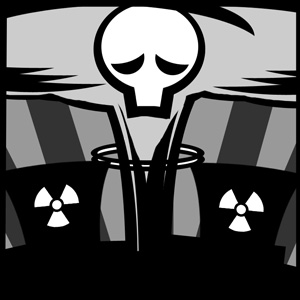
The Terror of Nuclear Power
Artwork: Nathan Bebb(http://skeptoid.com/episodes/4092)
Let's have a seat at Homer Simpson's control panel, chow down on some donuts, and nap away into oblivion while blinking lights and buzzers warn of impending doom and that glowing green bar of uranium that fell into our trousers. Today we're going to examine the popular notions about nuclear power. Specifically, if xenophobia had not killed nuclear power in the United States in the late 1970's, there's a good chance that we'd have all been driving electric cars for the past 20 years; and uncounted billions of tons of carbon dioxide would never been sucked out of the ground, burned in power plants, and exhausted into our atmosphere.
So let's state the obvious. The immediate reaction to that statement is "OK, that may be true, but look at all the new problems we'd have created with Chernobyl-type disasters and lethal nuclear waste." Fair enough, and important questions, to be sure. Let's start with a quick primer on the various types of nuclear reactors.
So-called Generation I reactors were the early prototypes developed by many nations, and actually placed into production in a few cases. Generation I reactors were characterized by fundamentally unsafe designs, and kludged layers of afterthought safety systems. When most nuclear nations began deploying commercial reactors, they were usually of Generation II design. Generation II reactors were significantly improved, but these changes were primarily evolutionary. Most of the commercial plants in operation in the United States are Generation II designs. A little over ten years ago, Generation III designs began appearing in some of the world's most advanced nuclear nations. Generation III reactors incorporate not only evolutionary improvements, but also revolutionary changes such as fuel cycles that result in much less nuclear waste; reduced capacity for the creation of weapons-grade plutonium; and passive safety designs wherein the reaction cannot be sustained in the event of a problem and the system effectively shuts itself down, by virtue of its basic design. The newest plants being designed for commercial use are called Generation III+, which incorporate all the newest knowledge from operating Generation III designs. If a new reactor was approved and built in the United States today, it would be a Generation III+ design. Even if every plant employee keeled over with a heart attack, neither a Chernobyl nor a Three Mile Island type accident would be possible; the systems are fundamentally redesigned so that the reaction cannot be sustained if things go outside the parameters.
The Idaho National Laboratory is the United States' primary advanced reactor research facility, and they've outlined six new reactor types to be developed for Generation IV. The designs take everything to a new level: Lower cost, safer designs, near-total elimination of nuclear waste, and reduced risk of nuclear weapons proliferation. There are also Generation V reactors in the ether, but these are primarily the domain of late-night rumination sessions at the lab, fueled by tequila and pot.
Then there's fusion power, which is everyone's ultimate goal. Fusion reactors have the profound advantages of using simple tritium or deuterium for fuel, producing no significant waste, and absolute safety since if anything goes even slightly off-kilter, the plasma disappears and you have no reaction. It's the ultimate in cheap, clean, safe, renewable energy, despite gross misunderstandings of the technology expressed by Greenpeace and other factions. The first operational tokamak fusion reactor for research is being built by the international ITER consortium in France and is expected to come online in 2016.
So you can probably guess that Three Mile Island was probably not the newest and safest design, and you'd be right. It was a Generation II design. It was the first and only significant nuclear accident in American history. A broken valve caused coolant to leak into a containment facility designed for that purpose, raising the temperature of the core and causing a partial meltdown. Despite significant confusion on the part of the operators (this being their first experience with an accident), and a somewhat lengthy chain of errors and misunderstandings, everything eventually worked out just as it should. There were no deaths or injuries, and despite 25,000 people living within five miles of the plant, nobody was exposed to any radiation worse than a single chest x-ray. All the studies predict zero cases of future cancer, despite ongoing lawsuits that the courts continue to find to be without merit. With proper perspective, Three Mile Island can (and should) be characterized as a shining example of how well the safety systems work, even in the face of human error and old-fashioned reactor design.
But that's not the way it was perceived. By an unfortunate coincidence, Jane Fonda's movie The China Syndrome about a nuclear accident came out only twelve days before Three Mile Island. The Cold War with Brezhnev was in full force and the words "nuclear accident" were simply too much for a scientifically uninformed public. Three Mile Island became the first nail in the coffin of American nuclear power.
Seven years later in 1986, things got much worse. Chernobyl was suffering from inadequate funding. Much basic maintenance had never been performed. It had only a skeleton crew, nearly all of whom were untrained workers from the local coal mine. The only manager with nuclear plant experience had been a worker installing small reactors on board Soviet submarines. Some genius decided to run a risky test of a type that no experienced nuclear engineer would ever gamble on. The test was to shut down the water pumps, which must run constantly in that type of reactor; and then find out whether the turbines, spinning on their momentum alone, had enough energy to restart and run the pumps during the forty-second delay before the backup diesel generators would kick in. The test was so risky that one faction within the plant deliberately disconnected some backup systems, trying to make the test too dangerous to attempt. The test was run anyway. It didn't work, the pumps couldn't keep up, the graphite core caught fire, the coal miners couldn't find any shovels so they didn't know what to do, and the reactor exploded. If you think I'm exaggerating this, there are extensive resources both online and in print, if you really want the hairy truth. In this short space I'm probably not even giving you ten percent of what a travesty this was — I'm tempted to call it a joke but it's so not funny. For example, they scheduled this right in the middle of a shift change, and the new workers coming in didn't even know what was going on.
Two people died that day, and some 30 to 60 people were dead within three months. Predictions of eventual cancer deaths caused by the radiation run from 1,000 to 4,000. And, of course, the damage to the local environment is extensive and difficult to estimate. The terror of a radiation cloud blowing across Europe was the second nail in the coffin of American nuclear power.
Not only was Chernobyl a monumental failure of the human element, the plant was a Generation I design, specifically an RBMK reactor, which is generally regarded as the least safe reactor type ever built. One design flaw is that the core used combustible graphite, and this distinction is the main reason that Chernobyl-type disasters are not possible in most reactors around the world. Only a very few Generation I designs are still in use, all in the former Soviet Union, and all have been retrofitted with improvements intended to prevent this type of accident. Other nations have long been lobbying for the closure of these reactors, and rightfully so.
How do the dangers of nuclear energy compare to the dangers of fossil fuel energy? A report in the Journal of the American Medical Association found that some 50,000-100,000 Americans die each year from lung cancer caused by particulate air pollution, the biggest cause of which is coal-burning power plants in the midwest and east. Even taking the maximum predicted death toll from Chernobyl, we would need a Chernobyl-sized accident every three weeks to make nuclear power as deadly as coal and oil already is. Shall I repeat that? If the world was filled with Generation I reactors run by feuding coal miners, we would need a worst-case scenario every three weeks just to match the US death toll we've imposed upon ourselves by clinging to our current fossil fuel system. Next time you see a hippie cheering the defeat of nuclear power in the US, realize that a healthy environment and saving lives are clearly not their priorities.
Well, maybe to them it's more about the future of the planet than about saving lives today. Maybe they just don't want to see high-level nuclear waste created that's going to poison the planet for tens of thousands of years. I can see that. But here's the problem with that logic: The plants we're designing now produce less waste than ever. Some on the drawing board produce none at all. We've already created most of the waste that we ever will. It already exists. It's out there. Lobbying against future cleaner plants won't make the existing waste go away. It's out there now in temporary facilities in neighborhoods all across the country, way more vulnerable than it would be in proper permanent storage in Yucca Mountain.
Opponents say that Yucca Mountain is geologically unstable or otherwise too hazardous, so the waste might leak out. Well, trust me: The location of the Yucca Mountain site was one of the most lengthy and expensive decisions the government ever made. What do you think they were doing with all that time and money, picking their noses? Well, it was a government program, so a large part of the time and budget probably was spent on nose mining. Nevertheless, this was one of the most scrutinized decisions ever made. Environmentally speaking it's as good a site as we could hope for. If you're concerned about it, go to a neutral and reliable source and research it personally. From every scrap of reason I can muster, environmentalists should be Yucca Mountain's #1 fans. I can't imagine why they prefer to leave the waste out where it is now, unless they are driven more by ideology than by science. Who would have thought that?
There is a safe and clean solution to our energy crisis, gasoline prices, and global warming. It's the latest generation nuclear reactor.
You should follow me on twitter here.
Subscribe to:
Posts (Atom)
